A retro office horror puzzle set in 1986 archives
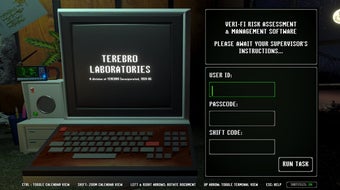
Things Too Ugly, from Professor Space Games, is a first-person psychological horror puzzle set in 1986 that places you on the night shift at TEREBRO INC. As a newly promoted Risk Assessment Data Processor you sift corporate records and decode cryptic materials using period technology. The experience emphasizes tactile interaction with vintage tools, atmospheric AM/FM audio, and a slow-burn investigative narrative aimed at retro-tech horror fans.
Plays like Stories Untold but trades episodic experiments for office forensics
The game frames its core loop around close reading and device-based problem solving rather than action. You move through a dim archive, examine documents, and operate era-specific hardware. Puzzles require manipulation of tangible items, for example: GPS units, encoders, and floppy disks. That physicality ties investigation to the workspace and makes each solved cipher feel earned.
Puzzles demand patient decoding and reward pattern recognition
Puzzle design avoids explicit guidance and asks the player to form logical links across records and signal noise. The investigative approach is deliberately non-hand-holding, so success depends on careful note-taking and repeated reference to files. Choices throughout the investigation branch into two distinct outcomes, so decoding correctly changes how the archive’s story resolves and how evidence accumulates toward those conclusions.
The 1980s presentation tightens dread through sound and workspace detail
Visuals lean into a beige-brown office palette and period-accurate equipment that frame the setting as both familiar and uneasy. Audio includes a tunable AM/FM radio and environmental cues that mark shifts in tension. The first-person viewpoint and small office layout focus attention on subtle clues, while the river-side 1986 backdrop gives the location a historical weight without large set pieces.
Short, focused structure favors replay for inquisitive players
A single sitting runs roughly three to four hours, which concentrates narrative beats and keeps momentum tight. That concision means the game asks players to re-enter the archive to see alternate paths rather than extend a long campaign. The developer’s solo approach shows in the narrow, curated scope: the design sacrifices breadth for a dense, investigative hourblock built around discovery and moral choice.
In summary: a precise pick for players who prize slow investigation
In summary, the game is a precise choice for players who prefer deliberate, atmospheric investigation and a condensed evening experience. It rewards those who enjoy methodical puzzle work and narrative inference, and it is less suited to players seeking sprawling worlds or action-oriented pacing. Consider it a compact, tension-driven title for focused sessions and repeated playthroughs to explore decisions.